The Acacia Tree Was Still Standing: A Return to Venda After 35 Years, and the Questions That Remain
By Dr Paul Wolf, FRACGP
Cape Town, South Africa | 27 October 2026
Dedication
In memory of Dr Evert Helms, with gratitude to Leida Helms, and in honour of the doctors, nurses and other healthcare professionals who devoted so much of their lives to Siloam Hospital and the communities it served.
My own service at Siloam lasted just seventeen months. Many others served for years, even decades. Yet those seventeen months profoundly influenced the doctor I became and the course of my subsequent medical career.
This reflection is offered in gratitude for their dedication, their example and the lessons they taught me.
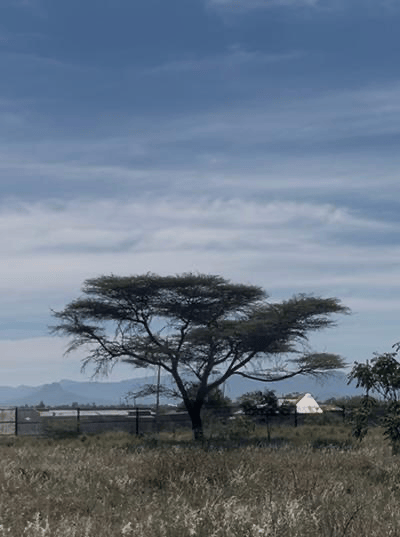
The acacia tree was still standing
More than thirty-five years had passed since I last stood at Tshilwavhusiku Clinic in Venda, in northeastern South Africa.
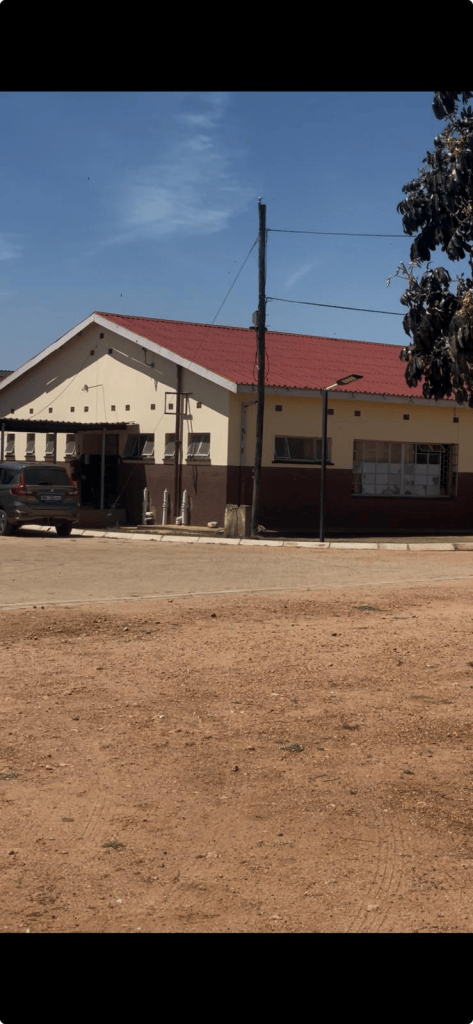
The clinic had expanded. New buildings had appeared. The house once being built for my wife Betty and me had found another purpose.
The landscape was familiar, yet so much had changed.
And there, almost as though time had decided to make one small exception, stood the acacia tree.
I had not anticipated how emotional this return would be.
In 1989 and 1990, I worked as a young doctor at Siloam Hospital under the leadership of the late Dr Evert Helms.
At the time, Tshilwavhusiku received weekly visits from a doctor. We recognised that these visits were insufficient for the healthcare needs of the community.
Dr Helms and I agreed that I would become the first permanent doctor based at Tshilwavhusiku, also serving two other clinics.
A house was being built for Betty and me.
We were only weeks away from moving there when life took an unexpected turn.
The move never happened.
What had seemed so close remained an unfulfilled plan, and my life eventually took me in a different direction.
Now, more than thirty-five years later, I stood looking at that same house, now serving another purpose, and at the acacia tree that had witnessed the passing years.
And I learned that the clinic still relied upon just one visiting doctor.
That discovery affected me profoundly.
Not because nothing had changed. Much had changed, and the improvements in infrastructure were unmistakable.
But because a need we had recognised all those years earlier remained painfully familiar.
As I listened to the nurses describing their daily responsibilities, including the consequences of domestic violence and sexual violence, I was deeply affected by the burdens they continued to carry.
I could not establish from one visit whether the overall burden of disease had increased or decreased. Populations, disease patterns and healthcare services have changed considerably.
But one fundamental need remained.
Accessible, continuous medical care, delivered by capable professionals who understand the communities they serve.
Standing there, I felt gratitude for the progress that had been made, admiration for those continuing the work, and a quiet sadness.
How extraordinary that a place we had once imagined becoming part of our future could, decades later, bring so many questions about the future of others.
I had returned to revisit a place from my past.
Instead, that place had begun asking me questions about the future.
The Night Fighter
There was another discovery awaiting me at Tshilwavhusiku.
For all the time I had spent in the region as a young doctor, I had never fully understood the historical significance of its name.
During our visit, I learned that Tshilwavhusiku means the Night Fighter.
The name is associated with King Makhado Ramabulana, remembered as the Lion of the North, whose resistance to those seeking to conquer or dispossess his people remains an important part of Vhavenda history.
I was told of a cave in the distant mountains associated with King Makhado and described in local accounts as a place of refuge during his struggle.
I looked towards those mountains differently.
For decades, they had simply formed part of the landscape of my memories.
Now they carried a history I had never properly understood.
How extraordinary that one can live and work in a place, care for its people and become familiar with its surroundings, yet know so little of the history beneath one’s feet.
On our final day in Venda, we attended a presentation of a book about King Makhado.
It seemed a fitting conclusion to a journey in which the past and present had repeatedly met.
And it reminded me that understanding a community means listening not only to its present concerns, but also to its history.
–
A homecoming I could not have imagined
I am writing this from Cape Town, after two extraordinary weeks travelling through Mopani and Venda with Betty.
We have visited schools, churches, healthcare facilities and community projects. We have met traditional leaders, artists, educators, nurses, doctors, children and people working quietly to improve the lives of others.
There have been speeches, radio interviews, emotional reunions and travel schedules that occasionally resembled a presidential campaign.
Fortunately, nobody was asking me to stand for election.
The electorate was spared that particular ordeal!
But behind the humour lies something far more meaningful.
This journey was never simply about returning to a hospital where I once worked.
It was about reconnecting with people and places that helped shape my life, while discovering how profoundly the world I remembered had changed.
Our time in Mopani brought renewed friendships and encounters with communities working to create opportunities for future generations.
At The Oaks and Acornhoek, we experienced remarkable hospitality, faith, perseverance and the determination of people to make a difference.
In Venda, our friends Thivhilaeli and Rebecca Makatu helped make an extraordinary journey possible.
Their generosity, friendship and understanding opened doors to people and places we might otherwise never have encountered.
And Betty was not merely accompanying me into my past.
She was discovering an important part of my life for the first time, while we were both learning about the South Africa of today.
That distinction matters.
I had returned carrying memories.
But memories, however precious, do not confer authority over the present.
The Venda I knew in 1990 is not the Venda of 2026.
To understand today’s communities, I must listen to those who live and work there now.
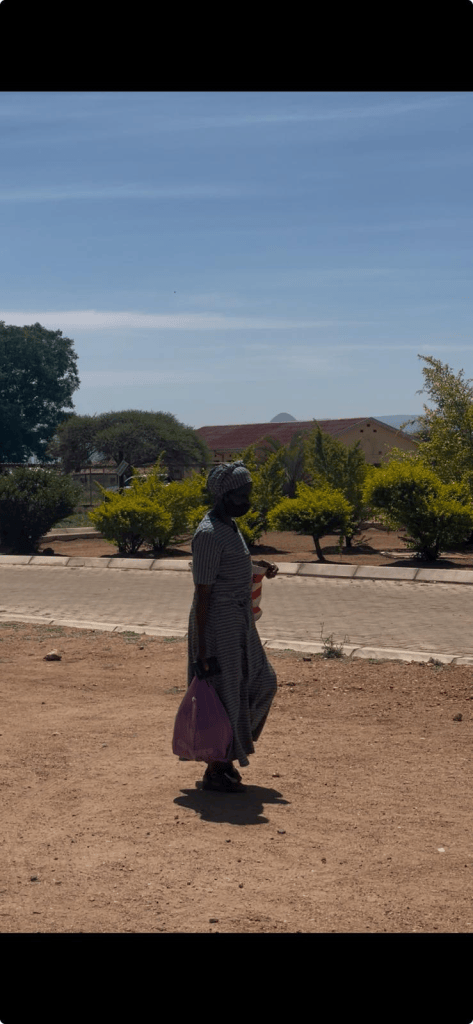
Throughout our journey, we repeatedly encountered something no statistical report could adequately convey: the dignity of ordinary people, their resilience and generosity, and their hopes for the generations who will follow.
Seventeen months that lasted a lifetime
My service at Siloam Hospital lasted just seventeen months.
I mention that deliberately.
Many doctors, nurses and other healthcare professionals devoted far longer periods of their lives to Siloam and its surrounding communities.
Some dedicated decades.
I was privileged to work alongside people whose service and commitment deserve recognition far beyond my own brief experience.
Dr Evert Helms provided an example of leadership that remained with me throughout my medical career.
His dedication, together with Leida’s contribution and that of so many colleagues, formed part of a remarkable legacy of service.
Returning to Siloam and walking through familiar parts of the old hospital brought back memories of another time.
The wards. The chapel. The daily demands of rural medicine.
And above all, the people.
–
–
We worked with limited resources, faced difficult decisions and depended upon one another in ways that strengthened our professional relationships.
But the most enduring lessons were not confined to clinical medicine.
They concerned humility, responsibility, cooperation and the importance of recognising the contribution of others.
One lesson has remained particularly important to me.
Knowledge matters enormously. But attitude determines how that knowledge is used.
A doctor may be technically competent yet fail to listen.
A doctor may understand a disease without understanding the circumstances of the person living with it.
And a doctor may possess impressive qualifications yet fail to recognise the indispensable contribution of nurses and other colleagues.
The people of Siloam taught me lessons that accompanied me through my subsequent medical career in Europe and Australia.
I do not regard those seventeen months as an achievement to be compared with the lifelong service of others.
I regard them as a gift.
And I remain grateful.
What kind of doctor does rural South Africa need?
At the University of Venda, I had the privilege of participating in a strategic conversation about health sciences education.
I brought one question in particular.
What kind of doctor does Vhembe actually need?
Not simply what degree should be awarded or what curriculum should be followed.
But what kind of clinician, colleague and human being should emerge from that education?
Rural medicine requires doctors who are clinically capable, adaptable and able to manage uncertainty.
Doctors who can recognise serious illness, respond to emergencies, manage chronic disease and understand when specialist referral is essential.
Doctors who work effectively with nurses, community health workers and other professionals.
And doctors who recognise that every patient is a person before becoming a diagnosis.
My own medical education at Maastricht was influenced by problem-based learning, pioneered at McMaster University.
It encouraged curiosity, critical thinking and responsibility for one’s own learning.
I remain convinced that medical education should develop the ability to reason, question and apply knowledge, rather than merely remember information.
But medicine cannot be learned from textbooks and lecture theatres alone.
It must also be learned where patients receive care.
Students learn from their supervisors, colleagues and the professional cultures of the institutions in which they train.
They observe how experienced clinicians handle uncertainty, respond to mistakes and treat patients.
They notice how doctors speak to nurses and how they behave towards people who possess little influence, money or power.
These examples become part of a student’s professional education, whether we intend them to or not.
This is why I have repeatedly returned to one conviction.
Prepare the ground before building the school.
A medical faculty requires more than classrooms, equipment and academic appointments.
It needs functioning clinical services, capable supervisors, effective teamwork and an environment in which professional learning can flourish.
Yet I am also willing to have that conviction challenged.
Perhaps the clinical environment must first be strengthened.
Or perhaps medical education and its clinical training environment can develop together, each helping the other to grow.
A conviction worth holding should also be capable of examination.
Beyond the buildings
Returning to Siloam Hospital was another emotional experience.
The scale of the new hospital infrastructure is impressive.
And rural communities deserve modern, safe and dignified healthcare facilities.
But buildings alone cannot guarantee excellent healthcare.
A hospital is also a community of professionals.
Its quality depends upon capable leadership, clinical competence, supervision, adequate staffing and a culture of teamwork and continuous learning.
It depends upon attracting and retaining dedicated people.
And it depends upon the strength of the clinics and primary-care services surrounding it.
This brings me back to Tshilwavhusiku.
If chronic disease is poorly managed, complications eventually arrive at hospital.
If serious illness is recognised too late, opportunities for earlier intervention may be lost.
If nurses in rural clinics lack adequate clinical support, patients may bear the consequences.
Strong primary care is therefore not simply a way of reducing hospital workloads.
It is an essential foundation of better healthcare, bringing care closer to communities, strengthening prevention and helping patients receive appropriate treatment before their conditions deteriorate.
But primary care requires more than buildings and goodwill.
It needs trained professionals, dependable resources, clinical supervision, effective referral pathways and an understanding of the circumstances in which people live.
My brief return to Siloam did not provide sufficient information to make confident judgements about its present leadership or operational preparations.
Nor should it.
A visitor may recognise important questions without possessing the knowledge necessary to answer them.
Observations should lead to inquiry, not premature conclusions.
The people whose voices must be heard
During our journey, we heard stories that were difficult to absorb.
Accounts of poverty, hardship and the vulnerability of women and children.
Stories of domestic violence and sexual violence that reminded us of the suffering experienced by people whose circumstances may leave them without adequate protection.
These realities must never become so familiar that society begins to accept them as normal.
Violence against women and children must never become normal.
But South Africa’s story cannot be reduced to hardship.
We encountered teachers encouraging young people to persevere.
Healthcare workers continuing to serve despite difficult circumstances.
People caring for vulnerable children with tenderness and dedication.
Artists preserving cultural memory through clay, wood and the stories of their communities.
And community leaders seeking opportunities for future generations.
At Takalani Children’s Home, we witnessed the commitment of people caring for children who deserve security, affection and opportunity.
At Mushaathoni Secondary School, we encountered young people whose futures should never be defined solely by the circumstances into which they were born.
And throughout Mopani and Venda, we were reminded that genuine wealth cannot always be measured financially.
Some of the richest experiences of this journey came from people who offered friendship, hospitality and a willingness to share their lives.
Those are the voices I hope will be heard in our forthcoming documentary.
Not simply mine.
More questions than answers
Tomorrow afternoon, I will meet Professor Bob Mash at Tygerberg in Cape Town.
His extensive experience in family medicine, primary care and medical education offers an opportunity to explore some of the questions raised by this journey.
What makes a district hospital clinically strong?
What kind of doctors should rural communities be educating?
And how can primary care, district hospitals and medical education reinforce one another?
I have no proposal to present and no commitment to make.
I simply want to listen and learn.
At seventy-one, I am increasingly aware that meaningful contribution does not always depend upon holding a formal position.
Sometimes experience can be useful through teaching.
Sometimes through encouragement.
Sometimes by connecting people whose knowledge and perspectives complement one another.
And sometimes simply by asking a question that helps someone else think differently.
I do not know whether anything practical will emerge from these encounters.
Perhaps a few useful conversations will continue.
Perhaps new relationships will develop.
Perhaps some knowledge will find its way back into service.
That would be worthwhile.
After more than thirty-five years in medicine, I still appear to suffer from two apparently incurable conditions.
Curiosity.
And an irresistible urge to ask questions.
I had hoped that advancing age might finally bring some improvement.
Unfortunately, the prognosis remains disappointing!
Perhaps that is just as well.
Before the documentary
Much of our journey has been recorded on camera, and we hope to share its story through a forthcoming documentary.
There will be time to introduce some of the remarkable people we encountered, revisit the places we travelled through and listen to their stories.
But before those images and voices are brought together, I wanted to write these reflections while the experiences were still fresh.
Because this is not simply the story of a doctor returning to a hospital where he once worked.
It is a story about people.
About memory and change.
About friendship, service and human dignity.
About the responsibilities we carry towards one another.
And about the possibility that knowledge acquired over a lifetime may still have something useful to offer.
Above all, it is about recognising that we cannot understand a community simply by arriving with our own ideas about what it needs.
We must listen.
We must learn.
And we must be willing to discover that our understanding is incomplete.
I came back to South Africa with memories of the past.
I am leaving with renewed friendships, profound gratitude and more questions about the future.
And when I think back upon these two extraordinary weeks, many images will remain.
The faces of children.
The warmth of old and new friends.
The mountains of Venda.
The dedication of nurses.
The impressive new hospital at Siloam.
And that acacia tree at Tshilwavhusiku.
Still standing after more than thirty-five years.
The clinic around it has changed.
The house built for a future we once imagined has found another purpose.
Generations have grown older. New generations have arrived.
Yet the tree remains, a quiet witness to the passing years.
I cannot know what the next thirty-five years will bring to that community.
But I hope that future generations will find not only better buildings, but also the doctors, nurses, teachers and leaders needed to make those buildings meaningful.
And perhaps one day, a young doctor will stand near that same acacia tree and discover, as I did, that the greatest lessons in medicine are not always taught in medical schools.
Sometimes they are taught by the people we came to serve.
That is the hope I carry away from this homecoming.
Before we build institutions, we must understand the communities they are meant to serve.
Before we offer solutions, we must listen.
And before we prepare the ground for others, perhaps we must first prepare our own minds.

