By Paul Alexander Wolf
Some years ago, I admitted an elderly couple from my general practice to Tailem Bend District Hospital. They had been referred from elsewhere. At the time, I was the Senior Medical Officer of both the medical practice and the district hospital in Tailem Bend.
They had been married for many decades and, like many older couples, their lives had become deeply intertwined. She was gravely ill. He was not.
When she died, the nurses noticed a change in him almost immediately.
“He doesn’t want to live anymore,” one of them remarked in passing.
At the time, there seemed little reason for immediate concern. He was still physically capable, independent and able to look after himself. Yet within days he developed a severe pneumonia. He refused transfer to Adelaide. Despite treatment, he died only a few days after his wife.
In retrospect, it appeared that he had been standing every day under a cold shower after she died. It was winter in the Coorong District.
I have reflected on that experience many times since. Not because it provided answers, but because it raised questions.
Medicine teaches us a great deal about disease, physiology and treatment. Yet some aspects of human life remain difficult to explain. Why do some people continue despite extraordinary adversity, while others seem unable to find a path forward after a profound loss? What sustains us when familiar sources of meaning suddenly disappear?
Over the years, I found myself returning to that question repeatedly. It resurfaced in unexpected places: in history, in biographies, in conversations, and in the stories people tell about their lives.
One such story involved Theodore Roosevelt.
In 1884, Roosevelt lost both his mother and his young wife on the same day. The brief entry he wrote in his diary has become famous:
“The light has gone out of my life.”
Many people would have been broken by such a loss. Roosevelt responded differently. He left New York and travelled west to the Dakota Territory. He immersed himself in ranching, physical labour and a life far removed from the world he had known.
Whether he was escaping grief or working through it is difficult to know. Perhaps it was both. What interests me is not the historical detail but the human response. Faced with a future he had never imagined, he kept moving.
I found myself thinking about this question again when reflecting on Professor Gauke Kootstra, whom I had encountered as a medical student in Maastricht.
Kootstra was an internationally respected transplant surgeon and one of the pioneers of modern organ transplantation in Europe. Yet what interested me was not his professional reputation, but something far more human. After retirement, he too entered a new and unfamiliar chapter of life.
The details of any individual life are always more complex than they appear from the outside. Yet his story reminded me that achievement, status and recognition may shape a life, but they do not exempt us from the challenges of change, adaptation and the search for renewed purpose.
The same question surfaced for me when reading about Viktor Frankl’s experiences in the concentration camps. Frankl observed that people responded to suffering in remarkably different ways. Some found reasons to continue. Others lost hope. Yet even Frankl resisted simplistic explanations. Human beings are more complex than any single theory can fully capture.
More recently, I came across the story of two journalists kidnapped in Somalia. Held captive for more than a year, they endured uncertainty, fear and isolation. At one point they attempted an escape, squeezing through a hole painstakingly carved in a crumbling wall, only to be recaptured.
What struck me was not merely their courage but their determination to continue imagining a future beyond their imprisonment. They exercised. They learned. They read. They planned. They adapted. They held onto the possibility that life might one day be different.
Eventually, they were released.
Yet even that is not the end of the story. One of them later reflected that the experience had taught him something unexpected. Stripped of almost everything, he discovered that family and friendship mattered more than any professional ambition or achievement. He went on to build a life, marry and raise children.
The longer I reflected on these stories, the less convinced I became that human beings are sustained by any single factor.
Instead of asking what sustains people, perhaps it is worth asking how people navigate those periods when familiar certainties disappear.
Such periods may follow bereavement, retirement, illness or disappointment. Occasionally there is no obvious crisis at all, merely the growing recognition that a future once taken for granted is no longer available.
This is not only a question for later life.
Over the years I have met many young people who felt lost before their future had properly begun. A failed relationship, a missed opportunity, an abandoned dream or simply uncertainty about the road ahead can feel overwhelming when viewed from close range.
Yet with the benefit of time, such moments often look different. What appeared to be an ending sometimes proves to be a turning point. What seemed a closed door occasionally leads to a path that would never otherwise have been discovered.
Looking back over many years in medicine, I am struck by how often people eventually found their footing again.
Not immediately.
Not easily.
And rarely in the way they expected.
The life they eventually embraced was often different from the one they had planned.
Sometimes profoundly different.
Yet it could still be meaningful.
Over the years, I found myself returning to these stories more often than I expected.
Not because they provided answers. In many cases they did the opposite. They challenged simple explanations and reminded me how little we sometimes understand about the forces that sustain people through adversity, loss and change.
Yet there was something else they seemed to share.
Whether it was a hostage in Somalia, a former president grieving the loss of his wife, a pioneering surgeon entering retirement, a young person struggling to see a way forward, or an elderly widower facing life without the person he had loved for decades, none of them could see far into the future at the moment their lives changed.
Perhaps that is what makes such periods so difficult.
We naturally want certainty. We want reassurance. We want to know how the story ends before we take the next step.
Life rarely grants us that privilege.
More often, we are asked to move forward with only a partial view of what lies ahead.
More often, people simply continue.
One day at a time.
One decision at a time.
One step at a time.
And gradually, almost imperceptibly, a future that once seemed impossible begins to take shape.
Perhaps this is one reason why advice offered during difficult periods is often so unsatisfying.
People who are struggling rarely need lectures about resilience. They do not need to be told that everything happens for a reason or that better days lie ahead. In truth, nobody knows what lies ahead.
What many people seem to need instead is enough hope to take the next step.
Not the next year.
Not the next decade.
Just the next step.
Looking back, I sometimes wonder whether we ask too much of ourselves when we demand certainty before moving forward. Life has never worked that way. Most of the important decisions we make are taken without guarantees. We choose careers, relationships, places to live and new directions without knowing how the story will unfold.
Only afterwards do the connecting threads become visible.
At the time, there is often little more than a sense that standing still is no longer possible.
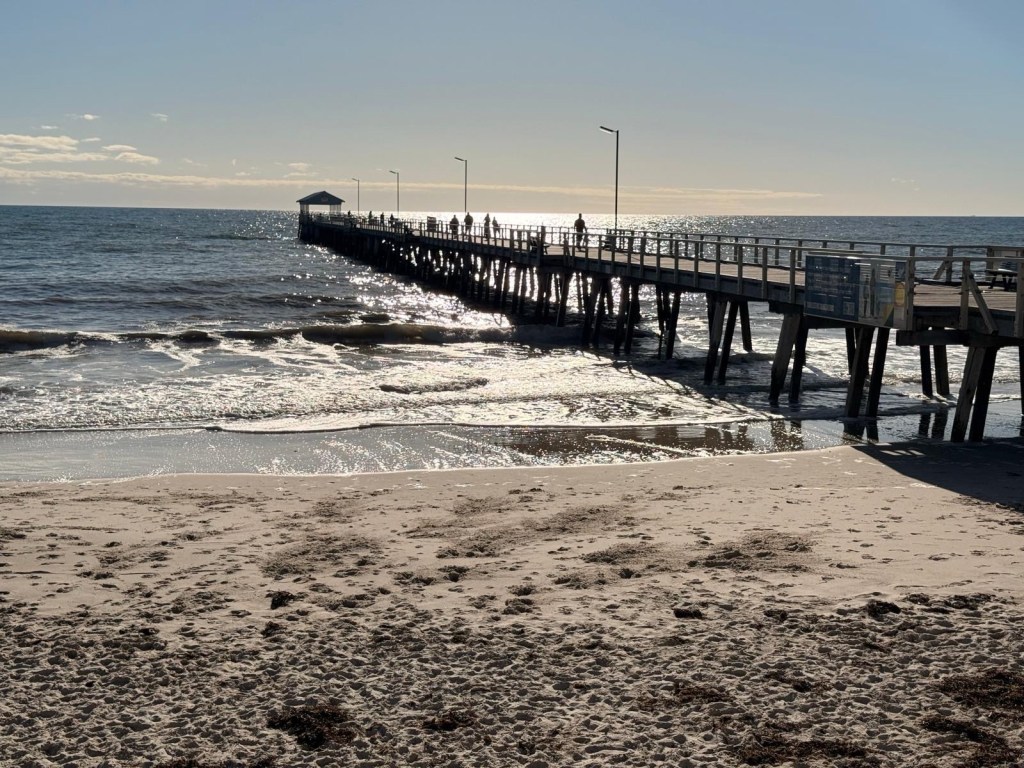
Perhaps that is why I have come to appreciate the image of a horizon.
A horizon does not reveal the entire landscape. It reveals only enough to continue the journey.
As we move forward, it moves with us. What once appeared distant gradually becomes familiar, while new horizons emerge beyond it.
The destination remains uncertain, but the next direction becomes clear enough to follow.
As life evolves, I find myself less interested in finding definitive answers to questions such as these.
Life has taught me that certainty is often elusive and that many of the most important questions remain only partially understood.
What I have come to trust, however, is the remarkable capacity of people to continue when continuing seems impossible.
Not always gracefully.
Not always confidently.
But often more courageously than they realise.
Perhaps we do not need to see the entire future in order to move towards it.
Perhaps it is enough to find the next horizon.

