
In South Africa, I had recently the privilege to teach a courageous anti- poaching unit on various subjects. The last including the management of heatstroke, dehydration, choking, burns and others.
This APU is, at large, a female led anti-poaching group, operating in one of the poorest areas of the Limpopo area in the Balule Nature Reserve.
This Reserve is part of the Kruger National Park. The Park has no fences, which helps the free movement of various wildlife, including “the big 5 animals”in South Africa.
Needless to say that this Reserve is an area of outstanding natural beauty where animals have free play and not confined in zoos, in little cages.
Many tourists do visit Kruger National Park, which is a very worthwhile activity. But not everyone is aware that the protection of animals is a job on its own. That Rangers are “on and off” on the go to keep an eye on things – and anti poaching units like the “Black Mamba’s” are ongoing busy to keep animals safe in their natural habitat, and disrupt people with criminal intentions.
The biggest threats are the activities of poachers, who operate within those natural habitats in an effort to get valuable horns and other attributes from targeted animals. They prepare “their catch” carefully by putting traps and snares on the ground and big animals like elephants and rhinos often die a gruesome slow death as a result of this: thirsty , dehydrated and bleeding slowly to death in an unforgiving area, targeted already by hyena’s. Being robbed then from their horns afterwards, by poachers; and the last attributes being sold for big money. It’s an illegal & gruesome activity but because the profits are so large on this business, – criminals are well trained to do those activities for both the benefit of themselves and their bosses behind the scenes. It’s not impossible that those big bosses have political connections providing some protection.
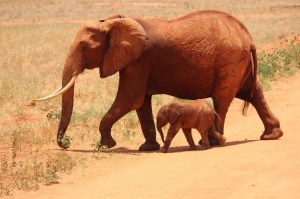
The Black Mamba’s disrupt the activities of those poachers by patrolling the natural habitat of the animals on a very frequent base. They carry no arms (!) and are at risk. At risk for attacks from animals, but they are fairly “street wise” within the domains of where they operate, the natural wilderness. One of the members of this anti poaching unit told me that one night they were chased up by a large group of elephants, for them more frightening than lions, – interestingly. But disrupting the activities of determined poachers is really a very risky business because this guys carry guns and will use them to kill, – if you come too close. And definitely this happened over the years.
Rangers and members of the Black Mamba’s have been killed in the past, sometimes by animals but also by poachers. So it’s for the Black Mamba’s important “tuning in” on the safest way to manage unpredictabilities of their various daily patrols. One of the things important for them is their own safety, including dealing with relentless heat at times and risks associated with this ->like overheating, heatstroke and dehydration. But also other things are important such as dealing with burns, choking and others.
Because I was working at the time via the Tshemba Foundation for Tintswalo Hospital and some outer clinics, I got the invitation to teach The Black Mamba’s on a couple of medical subjects. I am still grateful to Inez (from Tshemba) for this invitation.
The teaching session happened in a very interactive fun way and I did hear many of their stories. What struck me was that their first aid equipment was poor or absent, at large. So, I did donate a first symbolic first aid kit for “the photo”. But subsequent back in Australia, I did donate a fairly large amount of money on first aid protection for all anti- poachers in “the field”, for all people working “on the ground” – and fulfilling their missions whilst doing their patrols. It’s really important to protect those valuable people – because they contribute to conservation of animals being in danger of human activities.
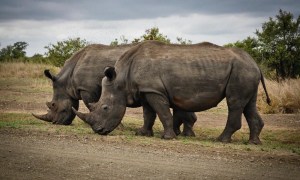
When we as humans don’t conserve nature. nature will not conserve us. It’s in general a topic getting far more pressing and important in the future. It’s not a matter of important and not urgent – but it’s a matter of both urgent and important in the broader sense, because we as a people are slowly but certainly in the process of destructing our natural habitat, which in the end is a large part of our own protection as human beings.
I did support “The Black Mamba’s” in South Africa – who had the 2nd of August their 10 years anniversary – and I will continue to do so provided the money arrives where it is intended to be, in my case the vital protection of the people “on the ground”.
Not that this applies to the “Black Mamba’s” but there are organisations using their “ people on the ground “ as “ show horses” to get the moneys coming – but not rarely moneys in some cases are used in fairly “mysterious” ways, lacking transparency.
Such practices are not rarely repugnant – because human greed is the seed for far too many injustices, including the harm caused to our natural habitat.
Human greed has been causing more casualties, deaths and destruction throughout the history of mankind and if mankind does not make serious efforts to stop this – we will cease to exist at some point. The examples are everywhere – outside the scope of this article.
The conservation war is a human war—with human casualties, and the casualties need to be minimised through decisive action in favour of proper protection. It’s vital.
The International Ranger Federation reports that 269 rangers were killed across Africa between 2012 and 2018, the majority of them by poachers.
Financial support with a view to help the anti-poaching unit on the ground, will facilitate their safety. But make sure you make a clear agreement on how your moneys will be spend and it is within reason to expect courtesy and an embracing response, which not always happens.
Furthermore in our own domain of our personal life it’s good to raise the question what life asks us to do in favour of protecting life, rather than destroying it. We did not receive life as “ a matter of fact” ( even though we did not ask for it) but we got it and were “thrown” on this planet.
And this planet asks each time and in each generation for the required action to do something in favour of life – and all lives, even when wise distinctions are difficult to make at times. It is what it is and the response lies in: “ What are we going to do about it?”
Each time a person stands up to improve the lot of others, it sends forth a ripple of hope to embrace frontiers not being seen as yet and the question is: “Why not?”
And in saying this, I feel like a little “Black Mamba” , – on the ground and “in the field” – and I take pride in this.
Paul Alexander Wolf.


