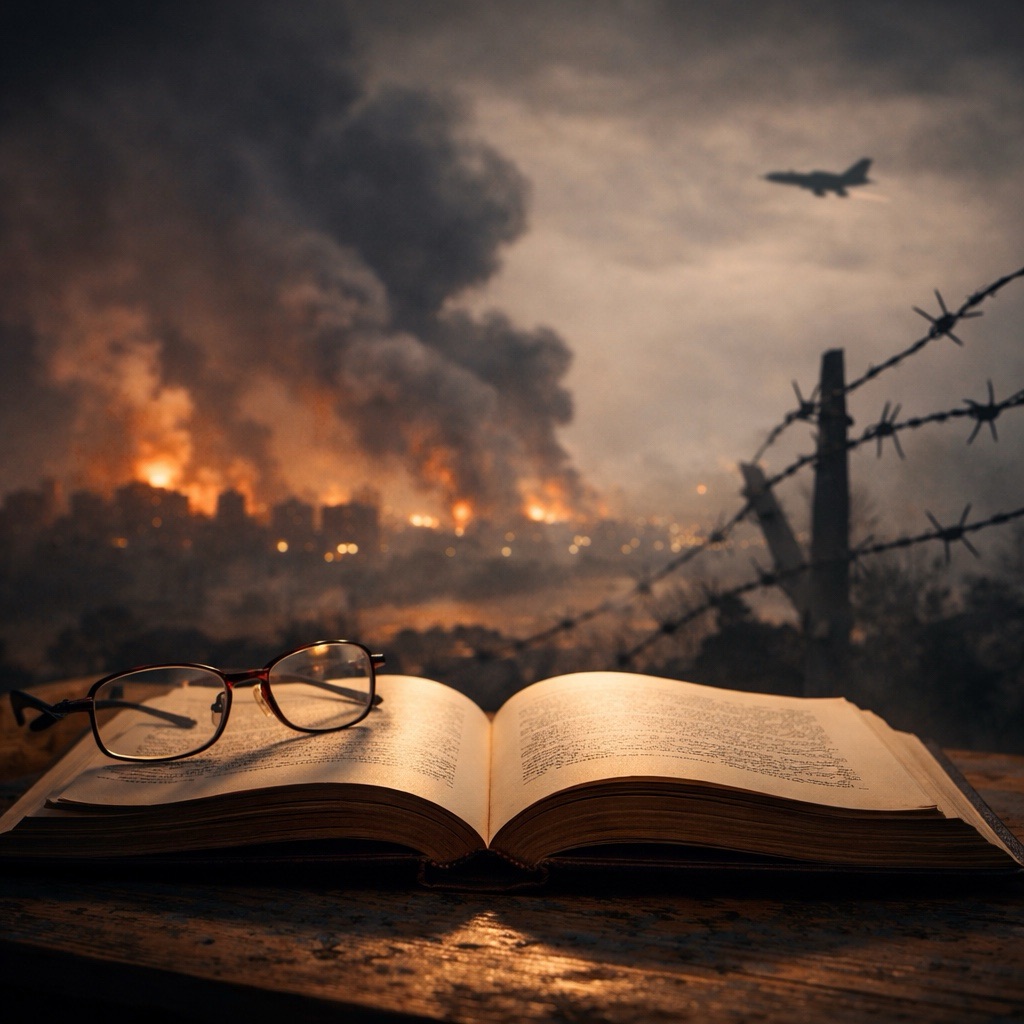
A World That Knows Better
The greatest danger of our time isn’t ignorance.
It’s how well we’ve learned to live with what we know.
I’ve been thinking a lot about how easily explanation can become a substitute for responsibility – in public life, in institutions, and in ourselves.
This is my attempt to name that shift, without being loud and without pretending I stand outside it.
⸻
We like to think of ourselves as informed, thoughtful, and morally alert.
We read widely.
We understand context.
We insist – correctly – that the world is complex and that easy answers are dangerous.
Much of that is true.
But there is a quiet line we have crossed without acknowledging it.
Somewhere between understanding complexity and living with it, we have begun to confuse explanation with responsibility.
We have learned to speak fluently about suffering without feeling compelled to interrupt it.
That is the moment worth stopping at.
Let’s cease pretending this is a failure of understanding.
It isn’t.
It is a failure of responsibility.
Political leaders delay while calling it prudence.
Institutions hide behind process while urgency bleeds out.
Allies excuse what they would condemn if the uniforms were different.
Media rewards outrage over clarity, speed over truth.
And citizens – all of us – learn to explain suffering instead of interrupting it.
None of this is neutral.
These are choices.
And together, they are teaching the world that civilian lives are negotiable if the justification is sophisticated enough.
This is how harm becomes normalised.
We talk endlessly about context, history, identity, and strategy – all of which matter.
But somewhere along the way, we have learned how to move past human suffering without pausing for it.
Once that habit takes hold, it does not remain confined to distant conflicts.
It reshapes how we speak at home.
How we argue.
How easily we excuse what we would once have refused to tolerate.
The danger of our time is not disagreement.
It is the professionalisation of justification.
What gets lost in this process is not an argument, but a life. Not a position, but a person. Harm does not arrive as an abstraction; it arrives in homes, in families, in moments that cannot be revised once they have passed. When justification becomes routine, suffering becomes background noise. That is how even well-intentioned societies lose their moral bearings.
Here is the line that matters now.
The measure of our values is no longer what we say we believe.
It is what we are prepared to excuse when standing up would be inconvenient.
When civilian lives are weighed against strategy.
When restraint is postponed for advantage.
When harm is acknowledged – and then set aside.
None of this requires certainty.
It requires honesty.
Honesty about when “complexity” has become a shield.
Honesty about when explanation has replaced responsibility.
And honesty about the point at which delay becomes a choice.
Because the truth is this:
Every system that failed to protect civilians was defended, at first, as reasonable.
Every injustice that endured was once described as unavoidable.
And every line that should have been held was first softened in language.
So this is not a demand for agreement, and not a call for purity.
It is a refusal.
A refusal to keep pretending that knowing more absolves us from doing better.
A refusal to confuse sophistication with restraint.
And a refusal to accept that civilian lives are ever negotiable, no matter how polished the justification.
I don’t write this from outside the problem.
I recognise these habits in myself.
I benefit from the same comforts, the same explanations, the same distance.
Which is why I’m trying to say this clearly – before it becomes easier not to.
The greatest danger of our time is not that we don’t know what is happening, but that we have become sophisticated enough to live with it.
Again and again, history shows that division is rarely what ordinary people seek, but what governments and institutions produce when power loses contact with the lives it governs. Most people want peace, safety, and a future for their children; what frustrates this is not the need for law and order, but versions of law and order that protect systems before people. The task, then, is not to weaken government, but to insist on forms of authority that serve human dignity first – restraining violence, resisting extremism, and holding power accountable to the people it exists to protect.
Paul Alexander Wolf
 We dream of things that never were and say: "Why not?"