by Paul Alexander Wolf
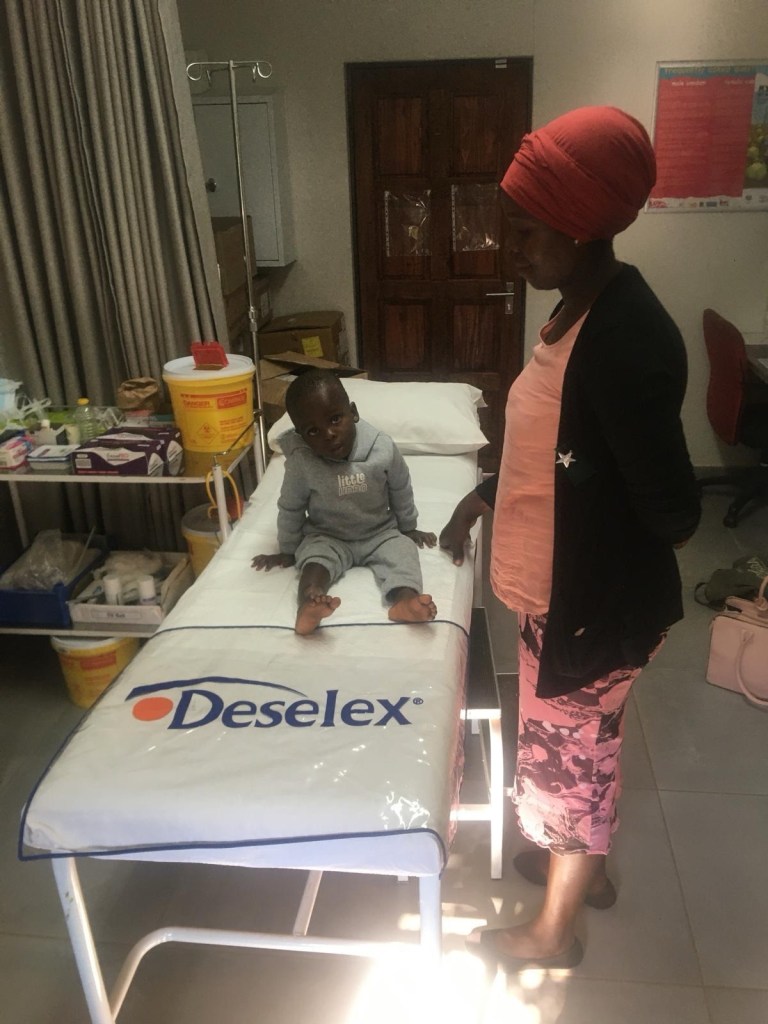
(Hlokomela Clinic – Treatment Room 1)
——
There comes a point in every long journey when the road ahead feels shorter than the road behind. That’s when you start looking not for new destinations, but for the meaning that carried you this far.
——
Beginnings
My father had fought in the Dutch resistance – one of those quiet, stubborn men who knew the difference between fear and conscience. My mother had carried messages for the same underground group, risking her life in silence. Together they survived, though their marriage did not.
I was born into a world still piecing itself together after the war.
In a way, I grew up among ghosts – not haunted ones, but those that whisper what courage costs. My father rarely spoke of what he’d done, yet the air around him carried the weight of history: the friends he lost, the questions he could never answer.
My earliest memories are from Goes, a small town in Zeeland, with pigeons on the windowsill and the church organ drifting through the morning air. There was a lake called the Singel, a secret island, and a little boy named Jan Keesje van de Vreugde – my first friend, and the first person I lost.
He was only a child, dying of leukaemia, but he gave me a record of Albert Schweitzer playing Bach shortly before he died. I didn’t understand death then, yet I played that record for weeks as if the music might keep him close.
That was when I first learned what compassion feels like – not an emotion, but a quiet act of staying present when nothing can be fixed. His death gave me something nobody else could have given – through the poetic way Schweitzer played the organ. Jan Keesje felt it, and I felt it but couldn’t name it. Little things in life, the kindness of others in unexpected moments, can make a lasting impression.
Those early years were full of small wonders: skating on frozen canals, the smell of apples stored carefully in our cellar, the steady hands of my mother cooking while sunlight filled the kitchen. From that peace I learned what love looks like when it’s ordinary and real.
——
Family Lines
My family history is full of detours.
My grandfather studied medicine, then gave it up in his fifth year to go to Canada and start a Dutch settlement near Yorkton, Saskatchewan. After several years his wife grew homesick, and they returned to the Netherlands. He joined a railway company and rose to become its President-Director – a man who believed progress should still have a conscience. He was a man of outstanding character; his painting hung in our hallway until, in a moment of editing my past, I gave it to a second-hand shop.
My father followed his own unpredictable path: law student turned resistance leader in Bussum during the Second World War. Betrayal wiped out his group; only he and my mother survived. Later he interrogated captured Gestapo officers – not out of revenge, but to understand how ordinary people become instruments of evil. He was never quite the same afterward. Few are.
Perhaps I just carried on the family tradition – never fully following the map, always searching for meaning.
I wasn’t a model student. I argued with teachers who believed more in discipline than curiosity and ended up in the headmaster’s office often enough to know the smell of the furniture polish. Yes, that was me: ordering the whole class to walk out when one of us was hit. I had my fair share of that at primary school.
After my parents’ divorce my grades collapsed, and I was placed with a foster family in Apeldoorn – kind, artistic people who gave me what I didn’t yet know I needed: calm. My foster father taught me to write my own summaries of foreign-language books instead of memorising other people’s. It was a small act that changed how I learned. Understanding had to be earned, not inherited.
I scraped through my exams, not with brilliance but with grit. Somewhere in that struggle a sense of service took shape – not a grand idea, more an unfinished promise. Maybe it began that day with Jan Keesje, or in the long shadow of my father’s choices, but it was there: the feeling that life should be used.
——
South Africa – Siloam
A promise at the age of nineteen, when all odds were against me (in the church where I was baptised in Goes), led me to medicine – not because I was certain, but because it felt like the right kind of uncertainty. Everything seemed to fall into place thereafter, slowly but steadily. I married my wife on the mutual agreement that I would serve in Africa.
After training and early work in Sneek, in the north of the Netherlands, I felt I was ready with some surgical, obstetric, and emergency-medicine skills. Africa had always been a whisper in the background – a calling that made no rational sense but wouldn’t let go.
When the opportunity came to work at Siloam Hospital in Venda, I didn’t hesitate. My wife, Betty, and I moved there, along with our young son. Our daughter was born in that hospital – in a place where red dust met faith and fatigue and song.
Those were eighteen months of purpose and exhaustion: long days, longer nights. A beautiful team of nine overseas doctors served a 500-bed hospital.
At that time Dr Evert Helms was Medical Superintendent at Siloam Hospital, overseeing its outreach clinics across the Kutama–Sinthumule area. My posting covered Madombidzha, Tshilwavhusiku and Kutama clinics, about 100 km from Siloam, with Tshilwavhusiku as my base – a small outpost roughly eight kilometres from Madombidzha.
These were mostly nurse-run clinics; visiting doctors came when they could. The system was fragile but alive, held together more by commitment than resources – a circuit of red dust, open hearts, and long days.
I volunteered to be the first and only white doctor there, and a house was built. I visited so often with my wife and two small children that it began to feel like home. For a time it truly was. I still remember the little tree near the house, stubbornly surviving the drought.
Then came a visit from my mother-in-law. I didn’t know at the time that she had been urged by my father and foster mother to persuade us to return, within the context of the violence in South Africa at the time (she disclosed this many years later, being on “ mission” at the time).
She worked not through confrontation but quiet influence, in the background, on the person I loved most, Betty, my wife. Our Venda Muzizane was just born and about eight weeks old.
Within weeks, after she left, everything began to unravel. My wife grew unwell, in such a way that the acting superintendent advised me to take the family back to the Netherlands. I did – not out of choice, but because love sometimes means retreat.
Still, a piece of me stayed behind – in the dust, in the wards, in the faces of the people who had become part of our story. I forgave my mother-in-law long ago; she acted from concern. Yet I’ve often thought her visit changed the trajectory of our lives. If she hadn’t come, I might never have left South Africa. If you disturb the pilots of a plane, a crash landing is inevitable when taking off.
——
Return and Renewal
Back in Europe I worked in public health in Almere, then trained as a GP in England. Years later, in Scotland, life steadied again – but the restlessness never left. The acting superintendent of Siloam, by then superintendent at Elim Hospital, visited us with his wife in Scotland. We wanted to go back, but he advised against it. Africa had marked me.
In 2023 I went back. Through the Tshemba Foundation in rural Limpopo, I spent two months as a volunteer doctor.
At Tintswalo Hospital, at Hlokomela Clinic, and in the surrounding villages I saw again the quiet heroism that medicine often hides: nurses improvising with nothing, mothers walking kilometres with children in their arms, hope surviving on almost no resources.
One morning a mother arrived after walking for hours with her feverish child. She looked exhausted, yet her eyes still held hope – that her child would be seen, that someone would listen. I realised I had no grand cure to offer, only presence. Sometimes that is what justice looks like: not turning away.
During that time I met H, a young woman with a struggling farm and a dream – to start Pool of Bethesda House of Grace, a refuge for women and children, the hungry and the broken. I supported her to become the person she is now, an apostle, and still hope to help her when her mission becomes reality and when I can do my work as a doctor.
Lighthouses don’t move; they give direction. Maybe that’s why I return.
——
Connections
I mention one.
A year earlier I had met a colleague – a young doctor named N – at the GP Superclinic in Cairns. She carried a depth that can’t be learned in textbooks, a compassion forged in experience and ancestral trauma, if I can name it that way.
We became colleagues, then friends – long talks, swims at Trinity Beach, dinners that felt like small sanctuaries in busy weeks. Her mother visited from Jordan, and together with Gemma, another staff member, we celebrated simple joys that now live as luminous memories.
Later we met again in Brisbane for her mother’s sixtieth birthday. It was one of those weekends that felt light and whole – when laughter makes the world seem repairable. She almost joined me at Tshemba, but accommodation was said to be full. It wasn’t. Life, it seems, has its own choreography.
We kept in touch through slow, thoughtful correspondence about medicine, missions, and meaning after the world breaks your heart. When she later went to Gaza on a humanitarian mission, I followed her journey from afar – helpless, proud, terrified, – both on what happened in Gaza and the safety of her and her colleagues. I felt the trauma and the profound cruelty.
Through the long silences of war I realised how deeply the world lives within us – for her, the heartbreak of what she witnessed. What happens in Gaza is not just a story on a screen; it is part of our shared human pulse. When she finally reached safety, I wrote no triumphant message – only gratitude that she was alive and loved.
Her courage reminded me that the line between peace and pain is thin, and that those who remain safe must bear witness with integrity.
——
Meaning
At seventy I still ask myself what drives me back – to Africa perhaps, to writing, to restless purpose. Maybe it’s the unfinished promise of my youth; maybe self-validation; maybe simply what faith looks like when stripped of illusion – the need to serve, to mend what little we can.
My wife has her own rhythm – her art and weaving, her therapeutic art activities for local community groups – her world. She will visit me in South Africa for a few weeks at a time, and for her that’s enough. She has not the pull I have; she didn’t make the promise I made. Love can last despite the detours.
The truth is, I’m still learning how to live between worlds – medicine and meaning, faith and fatigue, solitude and companionship – on top of that with family dynamics not always easy or straightforward.
Between the boy who listened to Schweitzer’s organ music and the man who still hears it faintly now, in the corridors of South Africa, and in the news from Gaza. We live in the world, yes – but the world also lives in us. Every place we serve, every person we meet, leaves a trace. I have seen it in South Africa, spiritually in Gaza, in Cairns – in every quiet corner of the human story.
If there’s a thread holding it all, it’s this: hope doesn’t always raise its voice. Sometimes it walks. Sometimes it waits. Sometimes it simply stays. And maybe that’s enough.
——
Epilogue – The Light That Endures
When I think of all that’s come and gone – the roads lost, the promises kept, the ones broken – I realise I’ve been blessed beyond measure. I’ve lived in countries that taught me humility, met people who showed me grace, and witnessed courage that silenced me. I have a family I deeply love, and they love me as well, including the beauty of a grandson nearly three years old.
I once thought meaning was something you chase. Now I know it’s something you grow – through persistence, through service, through love that doesn’t ask to be seen.
If I return to Limpopo (or anywhere else) again, it will not be to finish something grand, but to continue something simple: presence. To stand beside or be part of a mission, to walk the same dusty roads, to keep faith with those who endure.
And if I’ve learned anything from this long journey – from Goes to Siloam, Sneek to Scotland, Tshemba and what I have seen of Gaza – it’s that life’s true purpose is not to be remarkable, but to be faithful. To keep showing up. To keep trying. To keep love alive in the hard places.
Because the lighthouse at Haamstede, the one I watched as a boy, still burns in my mind. It doesn’t move; it endures. It gives light – not because the seas are calm, but precisely because they are not.
And maybe that is all any of us are asked to do:
to keep our light true to ourselves and others, even when the winds rise.
Everything can be taken away from us, as long as the last thing stays – and that is an enduring love, not thanks to, but despite everything.
——
In conclusion: The Shape of Love
Love can feel torn at times – stretched between duty and desire, between the life we choose and the one that calls us back. Yet perhaps that is how love learns endurance: not by escaping the pull, but by remaining true through it. Every distance, every silence, every act of care that asks nothing in return becomes part of its shape.
In the end, love is not the absence of struggle, but the light that keeps burning through it – steady as a lighthouse, not because the sea is calm, but because it never is.
——
Process Note – The Road Back (Creation)
This piece grew out of months of quiet recollection and conversations – a journey from fragments to wholeness. What began as memory became testimony: an act of reconciling service, conscience, and love. Through the refining, I learned again that writing is not about decoration but about truth spoken steadily – with humility, dignity, and presence. Each revision stitched the personal and the universal together: the faith of my father, the red dust of Venda, the endurance of Gaza, and the stillness of the lighthouse that endures. This conversation reminded me that meaning is not found in arrival but in return – not in being remarkable, but in being faithful.
— Paul Alexander Wolf – October 2025
——
Thank you for reading.
Every story like this carries more hands than one – the patients, the colleagues, the quiet acts of care that hold everything together when resources fall short.
To those still serving in difficult places, and to those who remember – may we keep learning what it means to be present, not perfect .
 We dream of things that never were and say: "Why not?"