HISTORY WILL JUDGE OUR SILENCE OVER GAZA—WON’T IT?
By Paul Alexander Wolf
………My father was a young man in Nazi-occupied Holland.
He led a small resistance cell—The Flying Brigade.
They weren’t heroes. Just students. Ordinary people asked to do the extraordinary.
Their mission was quiet but urgent:
Hide Jewish families. Feed them. Disrupt Nazi logistics.
Shelter the hunted. Slow the trains bound for the camps.
But it wasn’t enough.
The trains still ran.
The machinery of death still roared forward.
When the moment came to strike harder—when assassins were hired to eliminate Gestapo figures—they were betrayed.
Interrogated. Tortured. Executed in the dunes.
Only my father survived. And the woman who would become my mother.
By chance. By grace.
By something neither of them ever fully understood.
And so—I exist.
Not because someone won a war.
But because someone refused to stay silent.
That legacy doesn’t give me status.
It gives me responsibility.
Because silence, too, is a form of participation.
I’ve been watching Gaza.
And I’ve been grieving.
Let’s not pretend this is still just a war against Hamas.
Yes—Hamas committed atrocities that shattered lives and violated every norm of decency.
No moral person excuses that.
But the answer to terror cannot be collective punishment.
[Refined addition above]
At what point does a war against militants become something else entirely?
This is no longer a war.
It is a siege.
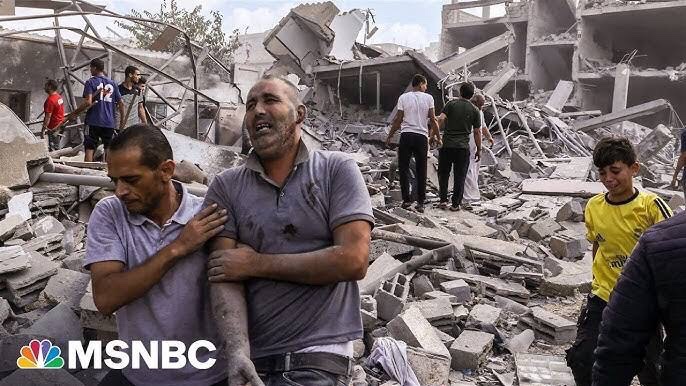
A sustained, suffocating punishment of over two million people—half of them children—trapped without escape.
Hospitals bombed.
Aid convoys blocked.
Journalists targeted.
Entire families erased.
And when you speak—even gently—an accusation often returns:
“Are you antisemitic?”
No? “We say you are.”
But let’s be clear: this is not about religion.
It is about power.
And the dangerous belief that some lives matter less.
The prophets of Israel—Isaiah, Amos, Jeremiah—weren’t remembered for playing it safe.
They confronted cruelty in their own house.
They exposed hypocrisy at the heart of power.
They warned: God does not dwell in temples built on blood.
Justice is not a slogan.
It is a burden.
And it always costs something.
Today, that burden falls on too few.
In Israel, there are those—brave dissenters—who say “Not in our name.”
They are threatened, fired, vilified.
They are not traitors. They are prophets of the present.
They remember what Nazi Germany did to the Jews—and they refuse to inflict it on others.
And what of Jesus?
Let’s not soften him into a spiritual greeting card.
He was a radical.
He confronted empire. He disrupted religion.
He reached for the outcast. He stood beside the wounded.
He was killed not because he was irrelevant—but because he was too relevant.
Albert Schweitzer once said: Christ did not come to fit into the world, but to summon it to something better.
If he walked today—through Gaza, Tel Aviv, Tehran, Washington—he would walk with the wounded.
He would speak truth to clerics, generals, and presidents alike.
And yes—he might be crucified again.
This time, by those claiming to defend his legacy.
But he would still speak.
Because he came not for one tribe.
He came for all of us.
And his spirit still stirs—in mothers, teachers, aid workers, and students who say—not in hatred, but in aching love: Enough.
They may not stop the bombs.
But they are stopping something else:
Our descent into numbness.
Our surrender to despair.
And they are not alone.
Think of Bishop Oscar Romero—gunned down at the altar for defending the poor.
Think of Rabin, Sadat, and Arafat—flawed, human, brave—killed for choosing peace.
Think of JFK—who reached out to Russia after steering us away from nuclear war.
He ignored his generals. He sought peace. And he paid the price.
And think, too, of the Prophet Muhammad—peace be upon him.
Born into tribal hatred, he chose mercy.
When his early followers were persecuted, he didn’t retaliate with mass violence.
He shattered the idols of vengeance.
He entered Mecca not with fire—but with forgiveness.
Would the same Prophet—who said, “If you kill one innocent, it is as if you have killed all of humanity”—endorse missiles on civilians or bombs on children?
I doubt it.
He would stand where he always stood:
Beside the orphan. The refugee. The unheard.
He would not sanctify war.
He would dignify the wounded.
Let’s also speak plainly about today’s leaders.
Benjamin Netanyahu is not a king.
But his politics echo Jehu—an ancient warrior of fire, fury, and divine justification.
Jehu rode through Israel purging dissent in God’s name.
But even Jehu could not escape judgment.
As the prophet Hosea declared: “I will punish the house of Jehu for the bloodshed of Jezreel.”
No leader—ancient or modern—is above moral accountability.
And that includes Tehran.
A regime that silences its own prophets, weaponizes faith, and sponsors militias while its people cry out for bread and dignity.
Iran is not the only force of destruction.
But it is one of the roots of hate—a hate that fuels Hamas and Hezbollah, and is matched, too often, by Israeli policies that dehumanize in the name of security.
No one wins this war of vengeance.
Only the graveyards expand.
[Refined addition:]
And yes, fear is real—on all sides.
Israeli children have grown up with sirens and shelters.
Palestinian children have grown up with drones and demolition.
Fear distorts judgment. But it cannot excuse injustice.
So yes—history will judge our silence over Gaza.
But it will also judge those who fed this fire—and claimed innocence.
Still, there is hope.
Not perfect hope.
But stubborn, ordinary, unkillable hope.
It shows up in the nurse who works through the night.
The Jewish activist who refuses to stay silent.
The Palestinian father teaching peace to a son born under drones.
The Israeli mother who says: “Not in my name.”
The Muslim scholar who reminds us: the Qur’an forbids hatred as much as it commands faith.
The Christian who remembers: the cross was never meant to be carried by the powerful.
And yes, even in a Family Physician from Australia.
The son of a man who once tried to stop the trains.
Still wondering what more he could have done—and what more he still can do.
We do not speak because we are righteous.
We speak because we are responsible.
The lesson of the Holocaust was never: Never again—to some.
It was: Never again. Full stop.
Power can crush bodies.
But it cannot silence conscience.
And one voice—just one—can begin a ripple.
A ripple that becomes a wave.
A wave that becomes change.
So let’s not go quietly.
Let’s dream the impossible and ask: Why not?
Let’s speak, act, and live as if justice still matters.
Because it does.
History is watching.
And heaven is listening.
Afterword
Those who walked with moral clarity—Jesus, Muhammad, Isaiah, Jeremiah, Amos, Oscar Romero, Albert Schweitzer—did not retreat from suffering.
They stepped into it. They risked everything to speak.
They didn’t offer comfort.
They offered challenge.
And in their stories, we are reminded: real peace does not come from silence.
It comes from truth, spoken in love—even when it costs.
And it’s not just the giants of faith.
Remember the nameless villagers who hid Jews in barns.
The South African nurses who defied apartheid laws.
The Iranian students who risked prison for chanting freedom.
The Gazan paramedics who kept tending the wounded after their hospitals were shelled.
The Israeli reservists who refused to serve in a war they could no longer defend.
And yes—even those of us who still ask, late at night: What does it mean to do enough?
History doesn’t only remember the powerful.
It remembers the brave.
And in the spirit of Robert F. Kennedy:
“Each time a man stands up for an ideal… he sends forth a tiny ripple of hope… and those ripples build a current that can sweep down the mightiest walls of oppression and resistance.”
So let us ripple—together.
In truth.
In dignity.
And in hope.
Paul Alexander Wolf
Family Physician, Australia
April 2025
Written in a personal capacity.
(This message is a call to conscience, not political partisanship. It is written in my personal capacity as a private citizen and doctor committed to the sacred duty of preserving life and human dignity. These words do not represent any institution or professional body. They are offered in the spirit of healing, peace, and moral reflection—across all faiths and nations.)
 We dream of things that never were and say: "Why not?"