When Schools Become Targets, We Must Speak
>>>
I’m just a Family Physician in Australia. I don’t have a seat at the UN. I don’t sit in Parliament. My blog isn’t broadcast on primetime news. But like many, I sit with the headlines, and I wonder — not as an expert, but as a human being — how far are we willing to let this go?
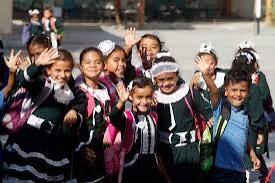
This week, Israeli forces raided six UN-run schools in East Jerusalem and issued orders to shut them down within 30 days. These schools, operated by the UN Relief and Works Agency for Palestine Refugees (UNRWA), serve approximately 800 Palestinian students — children who may now be blocked from finishing their school year.
UNRWA condemned the action, calling it a violation of the protections granted to UN institutions. “UNRWA schools are protected by the privileges and immunities of the United Nations,” said Commissioner-General Philippe Lazzarini. “Today’s unauthorized entries and issuance of closure orders are a violation of these protections.”
Meanwhile, the Israeli government accused some UNRWA staff of links to Hamas — a claim under investigation, but one that does not justify punishing children.
Parents are being told to register their children elsewhere. But where is “elsewhere” when Gaza’s education system is already in ruins? Over 70% of schools have sustained direct hits from Israeli airstrikes. Nearly a quarter of university campuses have been reduced to rubble.
The dream of education — ordinary, simple, human — is being shattered alongside the buildings that once held it.
This Isn’t New — But That Doesn’t Make It Normal
History gives us moments that demand more than silence.
When Rosa Parks stayed seated, she wasn’t just refusing to move — she was affirming human worth.
When Malala Yousafzai demanded her right to learn, she wasn’t asking for luxury — she was insisting on basic dignity.
Now, when Palestinian children are told their schools will be closed, it isn’t a policy decision — it’s an act of erasure. Another silent message written in ink and paperwork and checkpoints: your future does not matter.
Let’s be clear: There is no moral justification for turning schools into targets. Not ever. Not anywhere.
This Is Where I Stand — Quietly, But Not Silently
Most of us are not revolutionaries. I certainly am not. I work in a consultation room, not a courtroom or a cabinet. But we all inhabit some corner of this world where we can speak, however softly.
And so I return to the sentence that lives at the heart of this blog — a sentence shaped more by questions than answers:
“Even when the world feels beyond repair, we speak, act, and care — because history has always been written by those who dared to ask, ‘Why not?’”
Why not speak out when schools become battlegrounds?
Why not defend a child’s right to learn, even in war?
Why not say — plainly, unapologetically — that children are not combatants, and their classrooms are not fair game?
To Dream Is Still a Political Act
We live in a time when dreaming out loud can feel naïve — especially when so many in Gaza, in East Jerusalem, in refugee camps across the world, are focused on surviving the day.
But if we, in our relative safety, stop dreaming for them, what are we really saying?
We dream of things that never were, and ask: Why not?
Why not shield schools from war?
Why not uphold international law, even when it’s inconvenient?
Why not let these children — like any children — finish the school year without fear?
I don’t have all the answers. But I do believe this: To remain silent in the face of this is not neutrality. It is permission. And I, for one, am not willing to grant it.
If you’re still reading, thank you. Thank you for believing, as I do, that small voices matter — especially when they speak together.
This is not about politics. It’s about principle.
And it’s about asking — one more time — Why not?
Sources & References:
• UNRWA Statement on School Closures: UNRWA.org
• Gaza Education System Report: UN OCHA
• Statements by Philippe Lazzarini: @UNLazzarini
——->>
Paul Alexander Wolf
Family Physician, Australia
April 2025
Written in a personal capacity.
This message is a call to conscience, not political partisanship. It is written in my personal capacity as a private citizen and doctor committed to the sacred duty of preserving life and human dignity. These words do not represent any institution or professional body. They are offered in the spirit of healing, peace, and moral reflection—across all faiths and nations.
 We dream of things that never were and say: "Why not?"