We stand at a crossroads—not just as individuals, not just as nations, but as a global society.
AI is no longer science fiction. It’s here, shaping what news we see, who gets hired, and even influencing democracy itself.
But one thing hasn’t changed:
We still have a say in what happens next.
The question is—will we use it?
The World Is Changing Fast—But Who’s in Control?
Not long ago, political campaigns worried about bad headlines. Now, they worry about deepfakes making fake speeches.
Not long ago, parents worried about kids playing too many video games. Now, they worry their kids won’t know what’s real or fake online.
Once, leaders said, “We choose to go to the moon.” Now, they say, “We choose to let AI run security.”
But at what cost?
We thought technology would make us wiser. Instead, we know more facts but understand less.
We have more information than ever—but are we making better decisions?
If AI is shaping our world, who’s shaping AI?
If we don’t act, we won’t be the ones making those choices.
We’ve Been Here Before
Every great invention comes with risks.
The printing press spread knowledge—but also lies.
Nuclear power gave us energy—but also weapons.
The internet connected us—but also divided us.
The Industrial Revolution created jobs—but also deep inequality.
Now, AI is here.
It could cure diseases—or decide who gets treatment.
It could improve schools—or make education soulless and robotic.
It could strengthen democracy—or bury it under fake news.
The choice is still ours.
But not for long.
Democracy Doesn’t Disappear Overnight
It fades, step by step, until one day, it’s gone.
We see the warning signs:
• Laws ignored when they’re inconvenient.
• Leaders who silence their critics.
• Power concentrated in the hands of a few.
• AI-driven propaganda making truth hard to find.
If AI is used to control what people believe, democracy won’t just weaken—it will lose meaning.
And yet, many feel powerless.
“What Can I Do? I’m Just One Person.”
It’s a fair question.
We’re not world leaders, billionaires, or tech CEOs.
We don’t write the laws.
We don’t control the algorithms.
But does that mean we have no power?
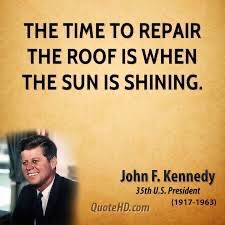
JFK once said:
“Our problems are man-made—therefore, they can be solved by man. And man can be as big as he wants. No problem of human destiny is beyond human beings.”
He wasn’t talking about governments. He was talking about us—ordinary people.
History proves it:
• The Civil Rights Movement didn’t start in the halls of power—it started in buses, churches, and streets.
• Women didn’t get the right to vote because lawmakers had a change of heart—it happened because women demanded it.
• The Berlin Wall didn’t fall because leaders wanted it to—it fell because people refused to accept division.
Change doesn’t come from permission. It comes from ordinary people refusing to be silent.
Small Actions, Big Impact
You don’t need to be a tech expert to make a difference.
You don’t need to be in government to stand up for democracy.
What you do every day matters.
- Speak Up for the Truth.
AI makes it easy to spread lies—but lies only work if people believe them.
Before sharing something online, pause. If you see misinformation, challenge it.
- Demand AI Rules That Protect People.
Right now, AI rules are being written. Who controls these systems? Who benefits? Who is left behind?
Support leaders who put people over profit.
- Use Our Collective Power.
Every movement for justice started the same way: with ordinary people refusing to look away.
• If you’re a teacher, help students think critically about AI.
• If you’re a worker, push for fair AI policies in hiring.
• If you’re a voter, demand better laws.
• If you’re online, use your voice to spread awareness.
Not everyone can do everything.
But everyone can do something.
The Future Is Still in Our Hands
It’s easy to feel like AI is too powerful, like we have no control over what happens next.
And in some ways, that’s true—AI is already shaping our world in ways we can’t stop.
But that’s not the whole story.
Because no matter how powerful technology becomes, it doesn’t erase our ability to think, to question, to vote, to organize, to stand up when it matters.
Hope isn’t about ignoring problems.
Hope is about knowing that even small choices still matter.
Robert F. Kennedy once said:
“Each time a man stands up for an ideal, or acts to improve the lot of others, or strikes out against injustice, he sends forth a tiny ripple of hope, and crossing each other from a million different centers of energy and daring, those ripples build a current which can sweep down the mightiest walls of oppression and resistance.”
So even as AI reshapes the world, we can still dream.
We dream of a world where technology serves humanity—not the other way around.
We dream of a democracy strengthened, not weakened, by progress.
We dream of things that never were, and say: “Why not?”
The world is changing fast. But the future isn’t set in stone.
We still have a choice.
And history will remember us—
Not for the machines we built,
But for the humanity we saved.
— Paul Alexander Wolf
References
• Eisenstein, Elizabeth. The Printing Press as an Agent of Change.
• Jungk, Robert. Brighter Than a Thousand Suns: A Personal History of the Atomic Scientists.
• Zuboff, Shoshana. The Age of Surveillance Capitalism.
• Polanyi, Karl. The Great Transformation.
• Snyder, Timothy. On Tyranny.
• Arendt, Hannah. The Origins of Totalitarianism.
• Zakaria, Fareed. The Future of Freedom: Illiberal Democracy at Home and Abroad.
• Harari, Yuval Noah. 21 Lessons for the 21st Century.
• Ressa, Maria. How to Stand Up to a Dictator.
• O’Neil, Cathy. Weapons of Math Destruction.
• Zinn, Howard. A People’s History of the United States.
• Postman, Neil. Teaching as a Subversive Activity.
• Albright, Madeleine. Fascism: A Warning.
• Pariser, Eli. The Filter Bubble.
 We dream of things that never were and say: "Why not?"