–
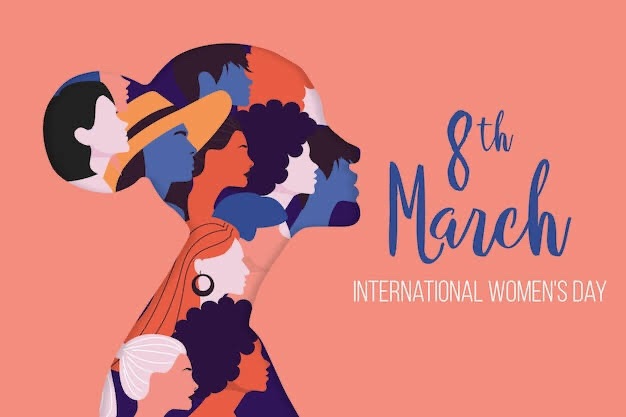
International Women’s Day: More Than Just Pink Cupcakes and Empty Promises
>>>
Ah, International Women’s Day! That glorious day when companies rush to slap pink logos on their ads, clueless bosses send out cringeworthy “You go, girl!” emails, and some well-meaning but utterly confused men say, “But when’s International Men’s Day?” (Hint: It’s November 19. You just never noticed because no one needed to fight for your right to vote or own property.)
Now, let’s talk about what really matters: why this day exists, why gender equality is still an issue, and why some people (mostly men) still don’t get it.
Why This Day Matters (Even for Men Who Think It Doesn’t)
International Women’s Day isn’t about bashing men or handing out participation trophies for basic decency. It’s about acknowledging that for most of history, the world has been one big boys’ club—where women were expected to stay quiet, look pretty, and be grateful for whatever scraps of freedom they were given.
Still think it doesn’t matter? Let’s try a quick thought experiment:
Imagine a world where…
• Every history book glorifies women while barely mentioning men.
• Most political and business leaders are women, and men are “a diversity hire.”
• Men’s earnings are consistently lower than women’s for the same job.
• If a woman assaults a man, society asks him, “Well, what were you wearing?”
Sounds ridiculous, right? Welcome to the female experience.
A Brief History of Gender Inequality (Or: Why Women Are Tired)
For centuries, women were legally considered property—which meant husbands could trade them, beat them, or discard them like old furniture. They were banned from schools, science, sports, and pretty much any activity that required a functioning brain.
Even when change started happening, it was painfully slow. Women weren’t “given” rights—they fought for them. The right to vote? Protested for. The right to work? Protested for. The right to wear pants without being arrested? Protested for.
And even today, the gender pay gap is alive and well. Globally, women still earn about 20% less than men. In some industries, that gap is even wider. (World Economic Forum, 2024)
So, when men say, “But women are equal now!”—we kindly remind them to check the scoreboard.
The Harsh Reality: Domestic and Sexual Violence
Now, let’s talk about the real villains—the men who think being born with a Y chromosome entitles them to absolute control.
Some sobering facts:
• 1 in 3 women experiences physical or sexual violence in her lifetime.
• Every year, thousands of women are killed by their partners or exes.
• During COVID-19, domestic violence reports skyrocketed—because for many women, “stay at home” meant “stay with your abuser.”
(United Nations Women, 2023)
And here’s the kicker: many of these men don’t even think they’ve done anything wrong. They’ll say, “She made me do it,” “She pushed me too far,” or the classic “She should have just listened.”
No. Just NO. If your masculinity is so fragile that you need to control, belittle, or assault someone to feel powerful, then you are not a man. You are a walking, talking disgrace.
The Tragic Reality: Women Taking Their Own Lives
Many women suffering from domestic violence don’t just endure physical scars. The emotional damage is catastrophic. Depression, PTSD, anxiety—these are the silent wounds no one sees. And tragically, for some, the only escape they see is suicide.
Studies have shown that a significant percentage of female suicides are linked to domestic abuse. (National Crime Records Bureau, 2019)
And yet, abusers walk free, often moving on to their next victim—because the system fails women over and over again.
The Dirty Little Secret: Women Bully Each Other Too
Let’s be honest—men have been the main architects of female oppression. But sometimes, women don’t help their own cause.
The workplace is a prime example. Women should be lifting each other up, but in many cases, they experience more bullying from female colleagues than from men. (Yes, it happens.)
Why? Centuries of being told there’s only room for a few women at the top have conditioned some to see each other as competition instead of allies. And nothing makes misogynistic men happier than watching women tear each other down.
Solution? Sisterhood over sabotage. Always.
What About the Kids?
Growing up in a violent home changes a child forever. Boys raised in abusive households are more likely to become abusers. Girls raised in these homes are more likely to end up with abusive partners. The cycle repeats generation after generation unless we stop it.
If you ever hear someone say, “She should just stay for the kids,” remind them that kids who witness abuse are at higher risk of:
📣Depression and anxiety
📣Substance abuse
📣Relationship difficulties
📣Becoming future victims or perpetrators
Domestic violence doesn’t just affect women. It affects entire generations.
So, How Do We Change Things?
Men: Step up.
• If you see sexism, call it out.
• Teach your sons respect and consent.
• If your friend mistreats women, don’t laugh it off.
Women: Support each other.
• Stop tearing each other down.
• Be mentors, not gatekeepers.
• If you have power, use it to uplift others.
Society: Stop making excuses for abusers.
• Strengthen laws.
• Provide real support for survivors.
• Educate children early about healthy relationships.
Conclusion: More Than Just a Day
International Women’s Day isn’t about getting a free cupcake at work or posting a motivational quote online. It’s about acknowledging how far we’ve come, how much is still broken, and how much work we have left to do.
So, by all means, enjoy the social media posts and the polite gestures. But remember—real change happens in what we do every other day of the year.
Because women don’t need a “Happy Women’s Day” message.
They need a world that finally treats them as equals, isn’t?
Paul Alexander Wolf
References
• World Economic Forum. (2024). Global Gender Gap Report 2024. Retrieved from https://www.weforum.org/reports/global-gender-gap-report-2024
• United Nations Women. (2023). Ending violence against women. Retrieved from https://www.unwomen.org/en/what-we-do/ending-violence-against-women
• National Crime Records Bureau. (2019). Accidental Deaths & Suicides in India – 2019. Retrieved from https://ncrb.gov.in/sites/default/files/ADSI_2019_FULL%20REPORT.pdf
• World Health Organization. (2021). Violence against women prevalence estimates, 2018. Retrieved from https://www.who.int/publications/i/item/9789240022256
 We dream of things that never were and say: "Why not?"