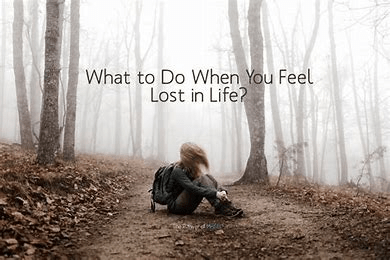
Introduction: The Weight of Being Left Behind
There are moments in life when it feels like the world has cast you aside. Maybe you were born into hardship, abandoned by those who should have cared, or led down a path you never meant to take. Maybe you have made mistakes—some small, some life-altering. Or perhaps life simply dealt you a cruel hand: illness, trauma, loss, or circumstances beyond your control.
When everything around you suggests that you are beyond redemption, beyond repair, or beyond hope, the hardest thing to believe is that there is still a future worth fighting for. But even when the world has given up on you, don’t give up on yourself.
The Myth of Free Choice
People often say, “You always have a choice.” But that is only partly true. The ability to make meaningful choices depends on what you have been given—your brain function, your upbringing, your circumstances.
For some, choice is straightforward: work hard, stay focused, push through. But for others, the struggle is greater. A child born into violence and neglect, shuffled through foster homes, may grow up without a clear sense of right and wrong, only survival. A person with schizophrenia or a traumatic brain injury may not have full control over their thoughts, let alone their decisions. And for those in extreme poverty or war-torn regions, every choice is shaped by the battle to simply stay alive.
It’s not just about willpower; it’s about what you’ve had the chance to learn, experience, and believe about yourself.
Yet, even within the harshest circumstances, there is often a sliver of possibility—one moment, one encounter, one inner decision that can begin to shift the direction of a life. Not easily, not overnight, but gradually. And that sliver is worth holding onto.
Rising from Rock Bottom
Some have walked the hardest paths and still found a way forward. Not because they were stronger or better than others, but because they found something—a purpose, a belief, an opportunity—that helped them take a different road.
• Malcolm X went from a life of crime and prison to becoming one of the most powerful voices for change in the 20th century.
• Nelson Mandela endured 27 years in prison but emerged as a leader who reshaped a nation.
• Victor Frankl, a Holocaust survivor, lost everything but found meaning in suffering, becoming a psychiatrist who helped others do the same.
And even today, there are stories of people who have defied impossible odds:
• Daryl Davis, a Black musician, chose to befriend members of the Ku Klux Klan, leading over 200 of them to abandon their hatred.
• John McAvoy, once serving a life sentence, discovered endurance sports in prison and became an Ironman athlete and motivational speaker.
• Jazz Thornton, a young woman who survived multiple suicide attempts, now advocates for mental health and suicide prevention worldwide.
These stories are not about superhumans. They are about people who, despite everything, found a reason to keep going.
A Personal Note: My Own Journey
I wasn’t raised in extreme poverty or war, but my childhood had its difficulties. At primary school, the head teacher used physical punishment, which was normal in those days but left scars—physical and otherwise. My school results suffered under his harsh discipline.
In secondary school, I refused to accept teachers hitting children. I led my classmates in standing up against it, even to the point of organizing a walkout. This defiance made me a frequent visitor to the headmaster’s office and earned me countless punishment lines. Eventually, I was transferred to a school for children with learning and behavioral problems—not because I lacked intelligence, but because I refused to submit to what I saw as unjust.
This new school, however, treated students differently. Without the constant fear of punishment, my response changed. I found my footing in learning and moved on to higher education. But life wasn’t a straight road. My parents separated, my school results fell again, and I was placed in a foster family to finish high school ( Havo).
Later, after military service, I found myself searching for direction. I returned to the church where I had been baptized and made a quiet promise: If I were ever given the opportunity to study medicine, I would serve in the best way I could.
It wasn’t an easy path—I had to fight for it. But life evolved from there, step by step.
I don’t share this story to compare struggles; mine was different from many others. But I do share it to say this: Your current circumstances do not have to be your final destination. What seems impossible now can shift. And sometimes, the decision to simply keep going is the first step toward change.
The Role of Society: The Need for a Helping Hand
While personal responsibility matters, we cannot ignore the role of society. People do not fall into homelessness, crime, or despair in isolation—there are social, economic, and systemic factors that push them there.
The gap between rich and poor is widening. More families are breaking apart. Domestic violence is rising. Mental health disorders are more common, and many are left untreated. Youth crime is escalating, often because young people are growing up in environments where no one has ever shown them a better way.
A truly just society does not only blame individuals for their failures—it looks at the conditions that create them. We need systems that recognize when people need a hand up, not just a handout. Because when we ignore these problems, they don’t go away. They grow, and eventually, they affect us all.
At the heart of this issue is connection. Relationships can make or break a person—especially in childhood. The right connections can lift people out of darkness, while the wrong ones can pull them even further down. We have a responsibility not just to ourselves but to each other—to recognize that no one thrives in isolation.
The Bend in the Road
If you are someone who feels lost, broken, or beyond hope, know this: a bend in the road is not always the end of the road.
Your past does not have to define your future. Your pain does not have to be your identity. And even if change feels impossible, small steps can lead to bigger ones.
Sometimes, it starts with a single decision:
• To believe—just for a moment—that a different future is possible.
• To accept help, even when pride or fear makes it hard.
• To take the next step, even if you don’t know where it will lead.
Because no matter what life has taken from you, you are still here. And as long as you are here, there is still a path forward.
And that’s where the seeds of hope are planted. And if the seeds of hope are fading, hope is failing, and hope is what we need, even the tiniest bit.
Paul Alexander Wolf
 We dream of things that never were and say: "Why not?"