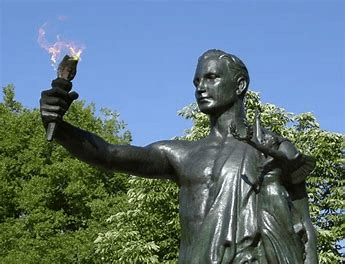
The Torchbearer
There was a time when David believed the world could change. He remembered it vividly—the summer of 1969, standing in front of his family’s black-and-white television as Neil Armstrong set foot on the moon. “One small step for man, one giant leap for mankind,” the astronaut’s voice crackled through the speakers, and David, then a boy of twelve, felt the universe expand in his chest. If humans could do this—defy gravity, reach the stars—what else was possible?
His father, a World War II veteran, was less impressed. “We can put a man on the moon, but we can’t stop killing each other down here,” he muttered, taking a sip of his coffee.
That sentence stayed with David for the rest of his life.
Decades later, he found himself standing on a different kind of battlefield—not in combat, but in a refugee camp on the border of Sudan. The air was thick with dust and desperation. He had come as a UN observer, tasked with documenting the human cost of yet another war. He had seen too many—Rwanda, Kosovo, Afghanistan—and each time, the faces were different, but the suffering was the same.
He walked past a group of children playing with a makeshift soccer ball—a bundle of rags tied together with twine. They should have been in school, learning about the moon landing, about the endless possibilities of their futures. Instead, they were learning the sound of gunfire, the smell of burning homes.
David sat down next to an old man who had seen more than his share of history. “It doesn’t change, does it?” David asked, his voice heavy with fatigue.
The old man smiled, a slow, knowing smile. “It changes, just not all at once.”
David thought of his father again. He had grown up believing war was inevitable. That peace was a dream only fools entertained. But sitting in the dust of a war-torn land, David realized something his father never had—peace isn’t an event. It isn’t a treaty signed or a war avoided. It is a torch, passed from one generation to the next, a flame that flickers but never dies.
As he left the camp, he passed the children again. One of them, a girl no older than ten, raised her hand in a small wave. She had no idea who he was or why he was there, but in that moment, David felt the weight of responsibility. The torch was in his hands now. And as long as there were people willing to carry it forward, the world would never be beyond hope.
Paul Alexander Wolf
 We dream of things that never were and say: "Why not?"